 Thank You for joining MeMost of us are in this industry to help our clients. Many of my students want to ensure they are doing everything they can to prevent injuries, and improve their clients performance. This desire to help can make it tempting to chase the latest trends and supposed breakthroughs. I wonder if I am the only one who, through my eagerness to help my clients, has become susceptible to various fitness gimmicks. I’ve been caught in the trap of constantly pursuing the next big thing, but now that has changed. For those who stay with me, I will be sharing what I have fallen for and why, I now question the practices I once endorsed. If you too, think you may have ever unwittingly followed a trend, only to discover it doesn't do what you once believed, read on. This is for you! My Experiences

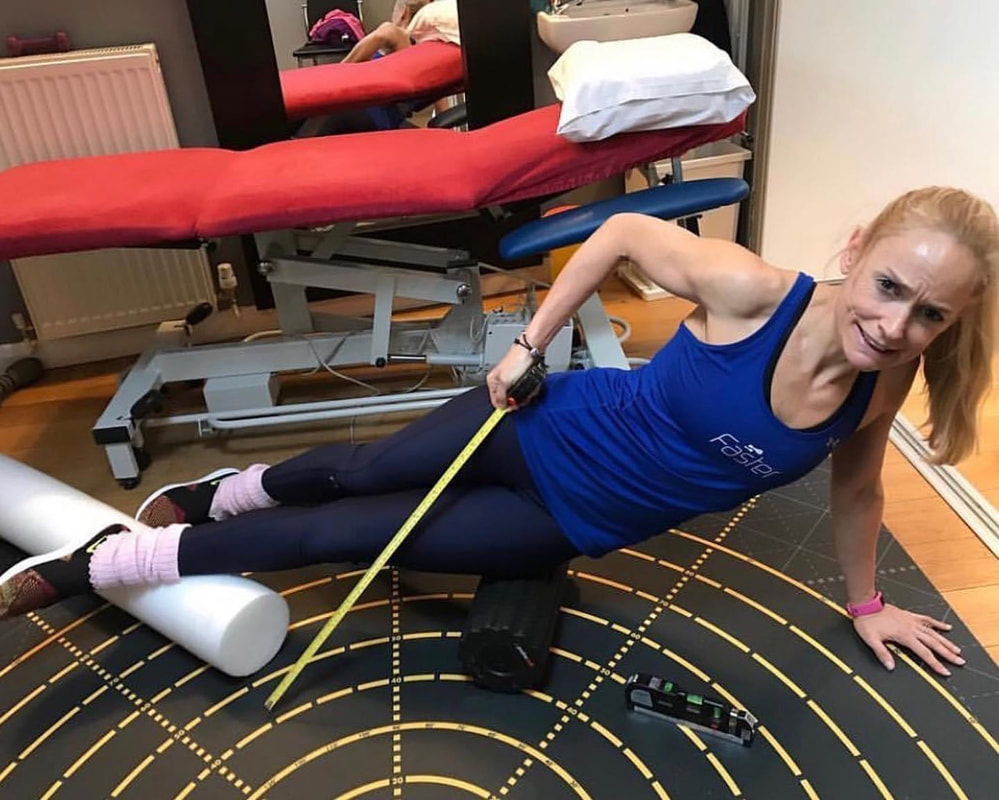
Thankfully At this point i was introduced to the FASter process i now teach on Motor Skill Application specialistsLooking back, I think I thought I was ‘Jesus Jo’, scraping fascia, fixing everyone in Wimbledon with my spoon while I was waiting for my “Faktr tool” to arrive. (I was going to add a bad joke about spooning everyone in Wimbledon there, but I'm not doing that). Now as I sit down considering an ice bath, (I’ll make sure I tell everyone about it 😂) I realise I must be one of the most gullible on Instagram. But that's ok. It has led me to reevaluate the techniques I once used and in some cases taught. My perspective changed when Faster introduced me to their process, that I now teach on the Motor Skill Application Specialist ( MSAS) course. This helped me understand the importance of quality research, how to ask the right questions, ensuring my clients needs are always put first. Although I continue to get things wrong, this process helps me to move away from being emotionally attached to any particular technique. It helps me to let go of my ego and biases, ensuring I remain open to change. I want to be the trainer, mentor whose clients’ success is based on this process and not my techniques. It’s about finding better questions, not letting biases cloud my judgement.  For those who have made it this far, let's ensure we are not killing our clients' performance. When looking at improving performance, it's vital we avoid vague terms often used to sell products. To do this, first, we must clearly define what aspect of performance we're focusing on. For example, if we’re looking to improve acceleration in running, it’s crucial to first understand the client's current level of experience, skill, biomechanics, and environmental factors, so we can measure and remeasure this. Once the specific area of performance is clearly defined, we can then consider questioning what influences it. In the case of acceleration, this includes: 1. Sequencing: of biomechanics: Ensuring movements are performed with the right order. 2. Power Generation: Generating the appropriate amount of power at the right moments during movement. 3. Combination of the above: The right Inter and Intra Muscular Contractions with the appropriate power for task, or Motor Skill 4. Understanding the role of mental state, confidence, experience, anticipation, and competition. 5. Fatigue Management: Response to various loads . speeds 6. Feedback: Task driven, video analysis, coaching Relying on techniques like foam rolling doesn't address these complex and interconnected factors. Foam rolling may offer short-term changes in the perception of range at a joint, but it does not contribute to the nuanced aspects of improving acceleration. The short-term benefits would cost your clients their long-term performance goals. Having the expertise of being a Motor Skill Application Specialist can be invaluable in this context. Such specialists are equipped with the skills to not only understand and apply the principles of motor learning and biomechanics but also to evaluate research and practices critically, and change when necessary. This ensures that the training methods used are not just based on trends or surface-level solutions, but on a deeper understanding of what genuinely improves performance. If you’ve been swayed by a fitness gimmick too, please share it in the comments. I’d love to know I'm not the only one! To find out more about the Faster Process taught on Motor Skill Application Specialist. Click on the link below . Thank You Joanne References These are meant as a starting point andI highly recommend doing your own research!
Journal of Sport and Health Scienc https://www.sciencedirect.com/science/article/pii/S2095254624000061 https://www.sciencedirect.com/science/article/pii/S2095254624000061.
0 Comments

In the world of fitness, the focus often lies on the numbers that are easy to track - gross income, profit margins, and new memberships.
These are undoubtedly important, but some of the missing and crucial pieces of the puzzle that have helped me and other businesses that I have worked with are costing lost members or member attrition. For myself and my clients, this has been a consistently significant factor that impacts our bottom line. Yet it often went unnoticed. According to a report by the International Health, Racquet & Sports-club Association (IHRSA), the average gym loses about 50% of its members every year. That's a staggering number, and it made me think ? Let's say a gym spends £75 on marketing to acquire a new member and that member cancels after one year. The gym then has to spend another £75 to replace them. If the gym could have spent £15 on retention efforts to keep that member for another year, the cost of churn, in this case, would be £60 (£75 for a new member minus £15 to retain the existing member). So, in this example, the gym could have saved £60 per member by focusing on retention efforts rather than acquiring new members. Over hundreds or thousands of members, these savings can add up to a significant amount. Bob Esquerre, working with Faster Health and Fitness, a renowned fitness industry consultant, has often emphasised the importance of member retention. In a recent conversation with Bob he states, "The cost of acquiring a new member is three times more than retaining an existing one." This underscores the financial implications of member attrition and the potential for increased profitability through improved retention. However, let's consider the other side of the coin. Some argue that member attrition is simply a part of the business model for many gyms. They point out that the high turnover allows for a constant influx of new members, often at higher rates than those grandfathered into older, cheaper plans. This perspective suggests that the focus should remain on marketing and sales to continually attract new customers. While this approach may work for some, it's worth considering the potential long-term benefits of investing more in member retention. This could involve investing in staff training to improve customer service, enhancing the gym experience, or offering more personalised fitness programs. According to HRSA’s 2012 edition of Profiles of Success shows that clubs spent a median of $103.50 in sales and marketing costs per new member account in 2011. Although the cost to acquire a new member has never been cheaper, a newly acquired member may not necessarily replace the revenue lost from a member that quits. From a study by the Harvard Business Review found that increasing customer retention rates by 5% increases profits by 25% to 95%. Applying this to the fitness industry, it would seem that even a small improvement in member retention can significantly boost a gym's profitability. More importantly, satisfied members are more likely to refer friends and family, providing a source of new customers that don't require a hefty marketing budget. According to Nielsen, people are four times more likely to buy when referred by a friend. While the traditional metrics of gross income and profit are important, gym businesses may not want to overlook the cost of member attrition. By investing more in staff, experience, and member retention, gyms can potentially increase their repeat business and ultimately, their revenue. Growing any business requires good decisions, however, you measure them. Each gym must consider its unique circumstances and decide where to allocate resources for the greatest return on investment. However, the evidence suggests that focusing on member retention, and the team that delivers customer experience could be a game-changer for many in the fitness industry. Let me know your thoughts in the comments below.

|